

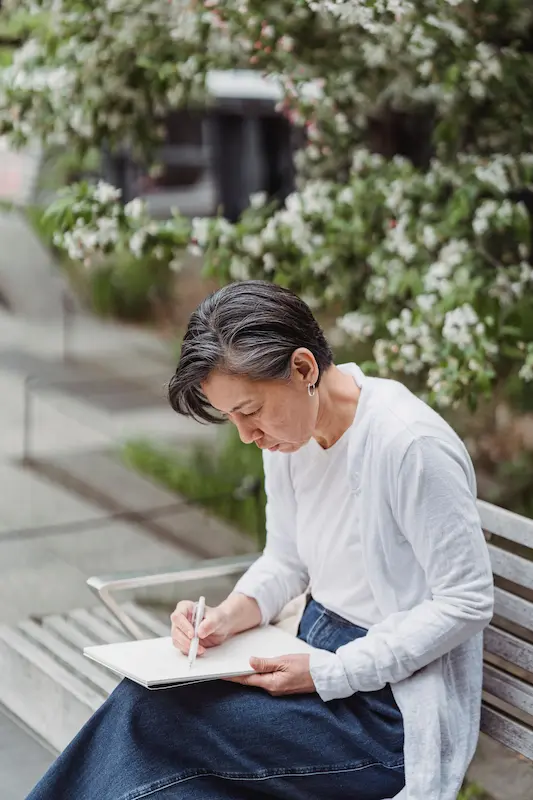
Have you ever walked past a park, café, garden, or quiet street and thought, That would be a nice place to sketch?
Then you kept walking.
Maybe you imagined people looking over your shoulder. Perhaps there was nowhere comfortable to sit. The weather might have been too hot, too cold, or simply unpredictable. You may even have pictured yourself carrying a sketchbook, pencils, brushes, watercolors, and an entire art studio just to sit outside for twenty minutes.
The idea of Outdoor Sketching sounds simple. Actually doing it can feel surprisingly complicated.
A recent discussion on r/ArtistLounge asked artists what was stopping them from sketching outside. The answers were remarkably practical: people, weather, uncomfortable seating, carrying supplies, lack of time, self-consciousness, bugs, and the fear of producing something that did not look good.
Yet the same discussion contained another message.
Some people simply went outside and started drawing.
Perhaps that is the useful part to remember.
Why Outdoor Sketching Feels Harder Than It Looks
Drawing at home gives you control.
There is your favorite chair, your usual lighting, your complete collection of supplies, and nobody wandering past your desk. Mistakes can happen without anyone seeing them.
Outside, almost everything changes.
One commenter said they were uncomfortable because there were no tables in public spaces. Another mentioned not wanting people to judge their work. Others worried about carrying too many supplies or failing to find somewhere comfortable to sit.
These aren’t really artistic problems.
They’re friction problems.
Once you recognize that, each one becomes easier to solve.
You don’t need to become someone who spends three hours painting in the middle of a busy city square. Making the first attempt much smaller can be enough.
Start With a Ten-Minute Sketch
One of the most useful experiences in the Reddit discussion came from an artist who sketches during lunch breaks.
They keep a small watercolor kit, sketchbook, and two pencils in their bag. When the weather is pleasant, they walk outside during lunch and spend about 20 minutes drawing. Instead of trying to capture every detail, they focus on shapes, loose trees, buildings, and simple shading.
That approach is worth copying.
Your first Outdoor Sketching session does not need to be an afternoon devoted to art.
Try this instead:
- Find somewhere you can sit comfortably.
- Set a timer for 10 or 20 minutes.
- Choose one simple subject.
- Draw the largest shapes first.
- Stop when the timer ends.
A tree is enough.
A flower pot, a bench, a building, a cup of coffee, or the view from a café window can work just as well.
Rather than producing a finished illustration, the goal is simply to spend a few minutes looking closely at something that is actually there.
You Don’t Have to Draw the Whole Landscape
There is a common assumption that Outdoor Sketching means sitting in front of an enormous mountain view and producing a beautiful landscape painting.
It doesn’t.
Small subjects can actually be easier when you’re starting.
Choose one:
- A leaf
- A tree trunk
- A mushroom
- A bird
- A flower
- A garden chair
- A bicycle
- A doorway
- A street corner
- A cup sitting on an outdoor table
Nature journaling programs from the National Park Service encourage observation through simple sketches, notes, questions, and observations rather than focusing only on artistic ability.
You can begin with a pencil.
That changes the question from “Can I make good art?” to “What do I notice?”
What If People Look at You?
This was probably the biggest theme in the Reddit discussion.
Some artists were uncomfortable with people watching. One person described strangers hovering over their shoulder. Another worried about someone seeing their drawing while it was still in its “ugly phase.” Someone else remembered having their sketchbook picked up and looked through without permission.
Those concerns are understandable.
The experiences varied considerably, though.
One artist who sketches outside almost everywhere said people were generally curious rather than hostile. Their usual experience was simply receiving a compliment. Another artist said they regularly sketch birds and trees in the park and rarely get bothered.
You don’t have to decide that strangers are either wonderful or terrible.
Instead, design your sketching spot around the amount of interaction you want.
If you’re nervous, try:
- Sitting somewhere slightly away from the main path
- Choosing a quieter park during working hours
- Sitting with your back toward a wall or hedge
- Drawing at a café rather than in the middle of a crowded plaza
- Starting somewhere familiar
- Going with one friend who also likes drawing
A short first session can help, too.
Ten minutes is much easier to tolerate than imagining yourself sitting there for two hours while everyone watches.
You Are Allowed to Ignore the “Performance”
There is another fear underneath being watched: What if my drawing isn’t good?
One commenter described feeling nervous because someone might look at their sketch and realize it wasn’t very good. Another artist remembered receiving a compliment on an objectively terrible fountain drawing years ago—and still keeping that drawing.
That story says something useful.
A sketch does not have to be impressive to be worth keeping.
When you draw outside, you’re recording a moment.
Maybe the proportions are strange. Perhaps the tree looks like a broccoli stalk. The bird might fly away halfway through. The weather could change and force you to abandon the page.
That’s okay.
A nature journal or outdoor sketchbook doesn’t need to become a portfolio.
The page can simply be evidence that you were there.
Make Your Supplies Smaller
Another surprisingly common obstacle is equipment.
One Reddit commenter joked about needing $100 just for a box to carry everything. Another explained that they had built a DIY James Gurney-style easel and reduced their entire kit to a small makeup bag.
An outdoor studio probably isn’t necessary.
For your first Outdoor Sketching session, a small sketchbook, one pencil, an eraser, and a sharpener are enough.
If watercolor is your preferred medium, add a tiny travel palette. Colored-pencil artists can bring three or four favorite colors instead of the entire set.
The smaller the kit, the easier it becomes to think:
I’ll just take it with me.
That distinction matters.
A hobby requiring twenty minutes of preparation before leaving the house will naturally happen less often than one that fits into your everyday bag.
Find a Place Before You Need One
Sometimes the problem isn’t motivation.
It’s logistics.
One artist in the discussion said finding a suitable place to sit could be difficult, so they started keeping a mental list of places they might want to sketch. Another kept a folding chair and picnic blanket in the car specifically for sketching.
An actual map isn’t necessary.
Instead, start noticing potential sketching spots during your ordinary day:
- That bench has a good view of the trees.
- That café has an outdoor table in the shade.
- That corner of the park is quiet in the morning.
- I could sit there and sketch the old building.
With a few familiar spots in mind, the next session becomes a much smaller decision.
Rather than asking, “Where should I go to do art?” you can simply ask, “Which of the places I already know should I try today?”
Let the Weather Change the Plan
Weather came up repeatedly in the discussion: heat, humidity, rain, cold hands, insects, and uncomfortable sunlight can all make outdoor art harder.
There is no need to force yourself.
Outdoor Sketching should bring you closer to everyday nature, not turn into an endurance test.
Try matching the activity to the conditions.
Warm day:
Choose shade, a café, or a morning session.
Cold day:
Keep the session short and use a pencil rather than wet paint.
Rainy day:
Sketch from a covered porch, café window, library, or sheltered entrance.
Perfect weather:
Take advantage of it, but don’t feel that every beautiful day needs to become an art session.
The outdoors is still there tomorrow.
Try Nature Sketching When People Feel Like Too Much
If drawing strangers makes you uncomfortable, don’t start with people.
Nature is much less demanding.
A tree doesn’t ask what you’re drawing.
A rock doesn’t look over your shoulder.
A flower doesn’t tell you that its proportions are wrong.
Birds are trickier because they move, but that can actually make sketching more interesting. Audubon’s guidance on drawing birds recommends observing outdoors, sketching what you see, and adding notes about what you notice.
You don’t need to finish the bird.
Three quick versions of the same bird can be enough.
One sitting.
One turning its head.
One flying away.
Now you’ve spent ten minutes watching something that you might otherwise have walked past.
Turn Outdoor Sketching Into an Everyday Nature Habit
This is where Outdoor Sketching becomes more than an art exercise.
You don’t have to schedule a special “nature day.”
Instead, attach sketching to something you already do.
Have coffee outside? Bring a pencil.
Going to the park? Bring a small notebook.
Waiting for a friend? Draw the nearest tree.
Eating lunch outdoors? Sketch the building across the street.
Taking a walk? Stop when something catches your attention.
The National Park Service describes nature journaling as a way to slow down and observe the natural world more carefully. Its programs often combine drawing, writing, questions, and simple field observations.
That makes Outdoor Sketching a particularly simple form of Everyday Nature.
You don’t need to travel somewhere spectacular.
You just have to stay in one place long enough to notice it.
Your First Outdoor Sketching Challenge
If you’ve been thinking about trying this but haven’t started, make the first attempt almost ridiculously easy.
Tomorrow, take:
one small sketchbook + one pencil.
Choose somewhere familiar and settle down for ten minutes. Pick one thing to draw, then simply look at it.
There is no need to photograph the subject first or search for a tutorial. Forget about whether anyone thinks you’re an artist. Pay attention to the shape of the leaves, the shadows, the different shades of green, or the way sunlight moves across the pavement.
When ten minutes are up, close the sketchbook and go home.
You can decide later whether you want to do it again.
That’s the whole point.
You don’t need to become an artist who spends every weekend painting outdoors.
You can simply become someone who occasionally stops walking and looks.
Key Takeaways
- Outdoor Sketching doesn’t require expensive equipment or advanced drawing skills.
- Start with 10–20 minutes and one simple subject instead of planning a full art session.
- If people make you uncomfortable, choose quieter locations, sit away from busy paths, or start with nature rather than people.
- Weather, seating, and equipment are practical problems that can be solved by choosing the right time, place, and smaller kit.
- The real value of Outdoor Sketching is not producing a perfect picture. It is learning to notice the place you’re already in.
Recommended Products
A comfortable outdoor sketching session is easier when you can settle into your surroundings rather than constantly thinking about being cold or uncomfortable.
Overland Roamer Blanket — A natural companion for park sketching, van trips, or an outdoor café on a cool morning. It gives you an easy layer to keep nearby when you want to stay outside a little longer.
Wandering Warrior Blanket — A good fit for a camp chair, picnic spot, or slower outdoor afternoon. Its relaxed feel works naturally with the idea of taking your creative practice outside.
Browse the Tropical Adelie blanket collection
Continue Reading on Tropical Adelie
- Nature Journal: Bring Nature Into Everyday Life Through Drawing — A natural companion to Outdoor Sketching, especially if you want to keep observations beyond a single drawing.
- Create a Goblincore Collection at Home — For taking the things you notice outside and letting them inspire a small collection at home.
- How to Make Your Room More Cozy: A Cottagecore Guide to Nature-Inspired Living — A look at bringing some of that outdoor feeling back into your everyday space.
Recommended External Resources
- “Nature Journaling” — National Park Service — A beginner-friendly introduction to using sketches, notes, questions, and observations to look more closely at the natural world.
- “How to Draw a Bird” — Audubon — A useful resource for anyone who wants to move from simply watching birds to sketching them in the field.
- “Observation Sheet – Nature Writing” — National Park Service — A practical way to structure outdoor observations around plants, animals, weather, rocks, water, and other details.
Final Thoughts
The hardest part of Outdoor Sketching may not be drawing at all. It may be giving yourself permission to sit somewhere and do something that doesn’t have to be productive, impressive, or finished.
The artists in that Reddit discussion had very different reasons for staying inside. Some worried about strangers. Some needed a better chair. Some hated carrying supplies. Others struggled with confidence, weather, or simply finding enough uninterrupted time. Yet the people who eventually made it outside often discovered that the experience was much more ordinary than they had imagined.
So take the small sketchbook.
Sit under a tree, beside a café window, on a park bench, or wherever you happen to find a quiet corner.
You don’t have to make a masterpiece.
You just have to stay long enough to notice what’s there.