

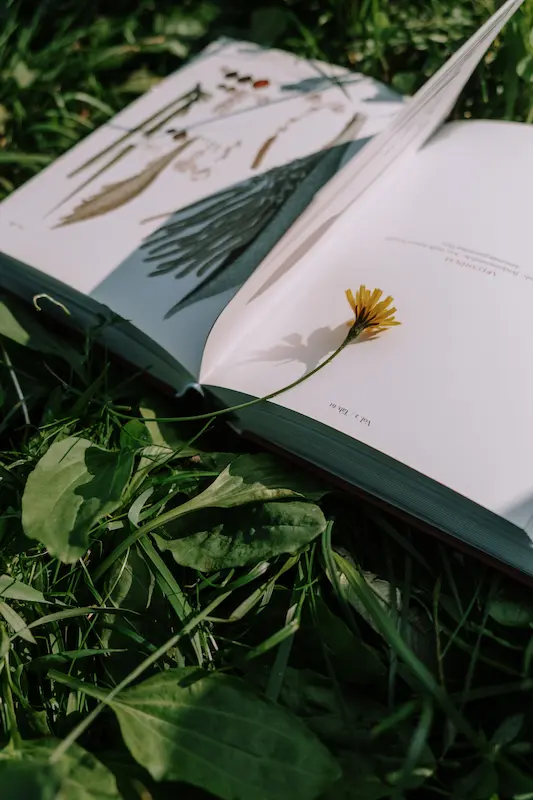
There are days when you want to spend some time in nature, but somehow the day gets away from you.
Work needs finishing. Errands need doing. Perhaps there simply isn’t a convenient trail, forest, or national park nearby. By evening, you may have spent the entire day indoors without really noticing what was happening outside.
A nature journal offers a simple way to change that.
You don’t need to plan a hiking trip or become an experienced artist. Sit beside an open window and sketch a houseplant. Draw a leaf from your morning walk. Spend five minutes watching birds from the balcony and write down what you notice.
The point isn’t to make beautiful drawings.
It is to start paying attention.
What Is a Nature Journal?
A nature journal is a place where you record observations about the natural world through drawings, words, numbers, questions, or a combination of them.
That makes a nature journal different from a traditional sketchbook.
A sketchbook might begin with the question, What should I draw?
A nature journal begins with something closer to, What is happening here?
Perhaps a crooked branch catches your attention because it bends toward the window. Maybe the same bird has appeared three mornings in a row. You might even sketch the shape of a mushroom without knowing what species it is.
The unfinished question is part of the journal.
You Don’t Have to Be Good at Drawing
One of the easiest ways to make nature journaling intimidating is to imagine that every page needs to look like a botanical illustration.
It doesn’t.
A nature journal can contain:
- rough pencil sketches
- colored-pencil drawings
- little maps
- leaf and plant shapes
- weather notes
- bird observations
- measurements
- questions
- short sentences
- tiny diagrams
- things you don’t know yet
A slightly messy page can sometimes be more useful than a polished illustration.
You are recording what you saw, not proving that you can draw.
That difference is especially useful if you already enjoy traditional art. Instead of treating drawing as something separate from everyday life, your sketching becomes a reason to look outside.
Start With Something Already Near You
You don’t need to find an impressive landscape for your first nature journal entry.
Look around your ordinary surroundings.
A tree outside your building counts. So does a weed growing through a crack in the pavement. A spider web on the balcony can become the subject of a page. The same goes for a cloud pattern, fallen leaf, neighborhood bird, houseplant, or patch of moss.
This is one of the simplest ideas behind everyday nature: nature doesn’t have to be somewhere far away to be worth noticing.
Try choosing one small thing and staying with it for five minutes.
There is no need to search for something more impressive.
See what happens when an ordinary object receives your full attention.
A Simple Nature Journal Method
Your first entry can be surprisingly simple.
You only need something to write with, something to draw on, and a small piece of nature to observe.
1. Write Down Where You Are
Start with the date, time, and location.
Precise coordinates aren’t necessary. “Backyard,” “kitchen window,” “local park,” or “coffee shop patio” is enough.
That small detail gives the page a sense of place.
2. Draw What Catches Your Attention
Pick one thing.
Don’t worry about completing it. Start with the overall shape, then add one or two details that seem interesting.
Perhaps the edge of a leaf has tiny teeth. The bark may have several different textures. A bird might have a surprisingly long tail.
Your drawing gives you a reason to look closer.
3. Add Words
Write down whatever you notice.
Fragments work perfectly well:
wet bark
three small mushrooms
wind from the west
bird disappeared behind the roof
new leaves since last week
This is where nature drawing starts becoming a form of nature communication. You are translating an experience into marks, words, and observations that you can return to later.
4. Ask One Question
This may become the most interesting part of the page.
Try starting with:
I notice…
I wonder…
It reminds me of…
You don’t have to answer the question immediately.
Suppose you see a strange leaf. You could simply write, Why is this one shaped differently?
Perhaps you look it up later.
That small question can become the beginning of a deeper relationship with the place where you live.
Turn Nature Journaling Into a Daily Ritual
The best nature journal is probably not the one with the most impressive pages.
It is the one you actually keep using.
Instead of creating another task on your schedule, attach journaling to something you already do.
– Morning Coffee –
Take your coffee near a window or outside.
Before checking your phone, spend five minutes drawing whatever you can see.
You might notice the morning light, a passing bird, or the way leaves move in the wind.
– After a Walk –
Before heading straight home, sit somewhere for another five minutes.
Draw one thing you noticed during the walk.
A quick sketch can turn an ordinary walk into a small observation ritual.
– Evening Observation –
Keep your journal near a window and record what changes as the light disappears.
Which birds are still around?
What sounds become noticeable?
How does the color of the sky change?
Even a few words can make an otherwise ordinary evening feel more connected to the world outside.
– Rainy Days –
You don’t even have to go outside.
Listen to the rain from an open window and record the weather. Draw the view from your room or sketch a wet leaf brought indoors.
This is where a nature journal becomes part of everyday life rather than another hobby you have to schedule.
Keep Watching the Same Place
One of the most rewarding ways to use a nature journal is to return to the same subject.
Instead of drawing twenty different plants once, try drawing one tree twenty times.
The differences may be subtle at first. New leaves begin to appear, flowers open, and older leaves gradually change color.
As the season moves on, branches become bare. Familiar birds may arrive, disappear, and return again.
The light changes, too.
Your journal gradually becomes a record of your relationship with a particular place.
It doesn’t need to be a dramatic wilderness landscape.
It could simply be the tree outside your kitchen.
Nature Journaling Can Change How You See Your Neighborhood
There is a subtle shift that can happen once you start keeping a nature journal.
You begin walking differently.
A patch of weeds that you once ignored becomes interesting because you recognize its leaves. A bird that was previously just “a bird” becomes something you want to identify. After rain, you may start noticing which plants appear first and which parts of the neighborhood stay shaded during the afternoon.
The landscape hasn’t necessarily changed.
Your attention has.
That is one reason nature journaling works particularly well for people who love nature but don’t have easy access to wilderness.
You don’t have to manufacture a wilderness experience in your backyard.
You can learn to see the nature that is already there.
Let Your Journal Be Imperfect
There will be pages where the drawing looks strange.
Some days, you might write only two sentences.
Other times, you may sit outside and realize that you don’t feel like drawing anything.
That’s fine.
A nature journal isn’t a performance. It doesn’t need to become another productivity project.
Some pages can be detailed field notes. Others might be almost empty. One page could contain a drawing you are proud of, while the next holds a badly drawn leaf and the sentence, I noticed this because it looked different from yesterday.
Both belong.
The habit is valuable precisely because it gives you permission to pay attention without needing to produce something impressive.
Take Your Nature Journal Outside
Once you have a journal you enjoy using, it becomes an easy companion for everyday outdoor rituals.
Take it camping or bring it on a road trip.
Keep it beside your picnic blanket and sketch beside a creek.
Draw the view from your campervan.
Write down what you hear while sitting beside a campfire.
For a slower outdoor afternoon, a blanket, notebook, pencil, and somewhere comfortable to sit may be all you need.
Its lightweight, packable design also makes it practical for taking a little comfort outside.
The idea isn’t to build a perfect outdoor setup.
It’s simply to make staying outside a little easier.
Key Takeaways
- A nature journal is about observing nature, not creating perfect artwork.
- You can start with ordinary things such as a tree, leaf, bird, cloud, houseplant, or patch of moss.
- Drawings, words, numbers, questions, and simple observations can all belong on the same page.
- Returning to the same place helps you notice seasonal and everyday changes.
- A five-minute journaling habit can bring nature into your daily routine without requiring a big outdoor adventure.
Recommended Products
Overland Roamer Blanket
The Overland Roamer Blanket pairs naturally with a nature journal because it is designed around slow outdoor travel.
Made from 100% cotton and available in three sizes, it can become part of a simple setup for sketching, reading, or observing nature outside.
Continue Reading
If you enjoy the connection between drawing, travel, and noticing small outdoor moments, explore the Nomad Print collection.
The collection offers another way to explore the details of outdoor life through visual work, from landscapes and plants to camping, travel, and the small objects that become part of a journey.
External Resources
- “Nature Journaling” — National Park Service: A practical introduction to recording dates, locations, weather, observations, questions, and seasonal changes. (National Park Service)
- “How Nature Journaling Can Make You a Better Birder” — Audubon: An introduction to combining words, pictures, and numbers while paying closer attention to familiar wildlife. (Audubon)
- “Nature Journal Club” — Biscayne National Park, National Park Service: An example of nature journaling as a creative practice combining sketches, paintings, writing, and close observation. (National Park Service)
Final Thoughts
You don’t need a wilderness trip to make nature part of your life.
Sometimes it starts with a pencil beside a window.
Draw the leaf. Write down the weather and notice the bird that keeps returning.
A month later, sketch the same tree again and see what has changed.
A nature journal gives ordinary moments somewhere to land. Over time, those small observations can change the way you see your neighborhood, your home, your walks, and the seasons passing outside your door.
Nature isn’t always somewhere you have to go.
Sometimes, you just have to stop long enough to notice it.