

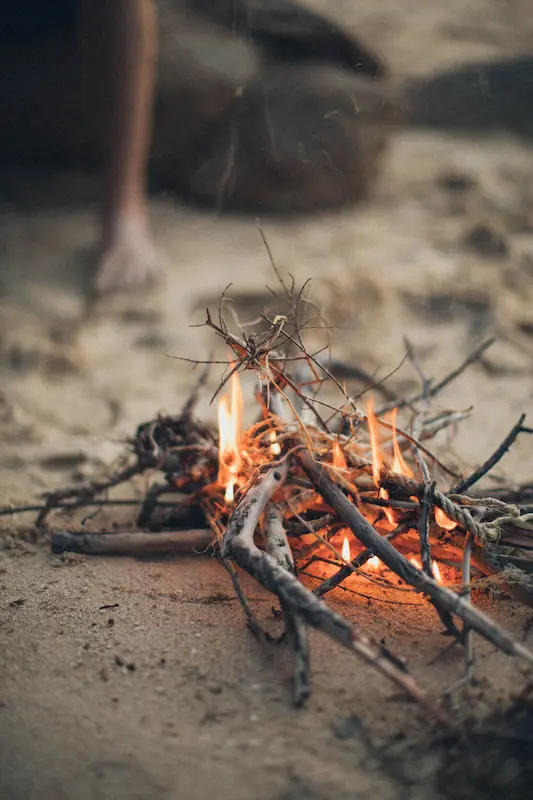
You’ve seen the photo. Pale sand, a ribbon of blue water, a tent glowing at dusk, a campfire throwing sparks into a pink sky. It looks like the calmest weekend anyone could plan. Then you arrive, and within the hour the wind has opinions about your tent and there’s sand in your sandwich. Somewhere around sunset, with a mug of something hot in your hands and the waves doing their slow work in the dark, you realize you wouldn’t trade it.
Here’s the good news: none of the annoying parts of beach camping are dealbreakers, and most have a simple fix. The rewards are as real as the photos suggest. This guide walks through five things beginners tend to run into, each paired with the payoff waiting on the other side.
I’ll use Assateague Island in Maryland as an example, since campers there share the shoreline with wild horses, but almost everything below applies to most beach campgrounds. One note first: rules vary from place to place. Many beaches don’t allow overnight camping at all, and where it’s allowed you’ll usually need to reserve a designated site. Check with the park or campground before you go.
Sand: It Gets Everywhere (and That’s the Beach)
The Annoying Part: Sand in Everything
Sand will get into your tent, your shoes, your cooler, and probably your sunscreen bottle. No trick stops it completely, and that’s okay. Once you expect it, it stops being a problem and becomes a running joke.
A few small habits keep it manageable:
- Put a doormat or small tarp outside the tent door, and leave your shoes on it
- Keep a little brush and dustpan inside for a quick evening sweep
- Store clothes and food in zip bags or lidded bins
- Shake out your gear before packing, and plan on a bigger cleanup at home
The Part Worth It: Soft Ground and a Short Walk to the Water
There’s a particular ease in stepping out of your tent barefoot onto warm sand and wandering a few minutes to the water’s edge. Morning coffee tastes better when the horizon is flat and the air smells like salt. By day two, you’ve stopped noticing the sand. What stays with you is the walk.
Wind: Stakes, Tents, and Sea Breezes
The Annoying Part: Stakes That Won’t Stay Put
Standard tent stakes are made for firm soil. In loose sand they slide right out, and a gusty afternoon can send a half-staked tent tumbling down the beach. The term to know is sand stakes: longer, wider stakes designed to grip loose sand. They’re inexpensive and worth owning if you plan to camp near the coast more than once.
If your stakes still aren’t holding, anchor with weight instead. Fill sturdy bags or empty gallon jugs with sand and tie them to your guy lines or corner loops. Burying a stake sideways, like a buried anchor, also holds better than pushing one straight down. And don’t leave a tent empty and lightly staked while you walk the beach. For more on coastal wind, our guide to Oregon Coast camping for beginners covers what first-timers run into on exposed sites.
The Part Worth It: Cool Breezes and Wave Sounds
The same wind that tests your tent also keeps the air moving on hot afternoons. Campers often notice that biting insects ease up when the breeze picks up, which is a small mercy. When it finally softens after dark, you’re left with the sound of waves, steady as breathing. Falling asleep to it is the thing people talk about most afterward.
Bugs and Wild Visitors: Camp Habits That Help
The Annoying Part: Biters and Snack Thieves
Mosquitoes, biting flies, and no-see-ums (tiny midges whose bites you notice before you ever see them) are part of many coastal campgrounds in warm months. Assateague’s own campground listing warns that biting insects are common and recommends repellent with DEET. Long pants, long sleeves, and socks in the evening help more than you’d think, even when it’s warm. If you’re camping near tall grass, give yourself a quick tick check at the end of the day.
Food is the other thing to plan around. Wherever wildlife is used to people, whether that’s raccoons, gulls, or wild horses, an open cooler is an invitation. At Assateague, park rules require food and drinks to be stored in a hard-sided container, like a locked cooler or your vehicle, whenever you’re not actively using them. Think of it as a campsite habit rather than a warning: eat, wipe down the table, and put everything away.
The same goes for distance. The National Park Service asks visitors at Assateague to stay at least 40 feet from the wild horses, roughly a bus length, and never to feed them. Pack out all your trash too, so nothing tempting is left behind. If wildlife makes you nervous, our piece on why scary camping stories are almost never about wildlife puts it in perspective.
The Part Worth It: Wildlife at a Respectful Distance
Watching a few wild horses graze along the dunes as the light turns gold is the kind of scene people describe for years. You don’t need to get close. In fact, the farther you stay, the more natural everything looks. The animals go about their evening, you sit in your camp chair, and everyone shares the beach.
Sun, Storms, and Evenings: Planning for the Weather
The Annoying Part: Strong Sun and Sudden Storms
Beaches have little natural shade, and the sun reflects off sand and water. Bring a canopy or umbrella, wear a hat, and reapply sunscreen every couple of hours and after swimming. Sunburn often shows up hours after you’ve felt fine, so don’t wait for it to tell you.
Storms deserve a little planning, too. In many coastal areas, summer evenings bring thunderstorms. Check the forecast before you go and again each day. The National Weather Service is clear that a tent doesn’t protect you from lightning, while a hard-topped vehicle does, and it advises waiting 30 minutes after the last thunder before leaving shelter. So make your Plan B part of your setup. Park your car close, keep a pillow and a blanket in it, and know you can retreat there if the sky turns. Sleeping in the car on a stormy night isn’t a failure; plenty of experienced campers do it.
Evenings can also feel cooler than expected once the sun drops and the wind picks up. Our post on why cold nights catch beginners off guard is worth a read before you pack.
The Part Worth It: Sunrises, Salt Water, and Fresh Air
Early mornings at the beach are quiet in a way that’s hard to describe: pale light, empty sand, gulls starting up. A swim in the afternoon resets your whole day. And after a storm passes, the air has a clean, rinsed smell that makes the cooler evening feel like a gift. That’s when a soft blanket across your lap does its best work.
Campfire Cooking: Simple, Smoky, and Satisfying
The Annoying Part: Wind, Rules, and Clean-Up
Cooking at the beach comes with a few quirks. Wind can scatter embers and make a fire hard to manage, so use only the designated fire ring at your site, keep water nearby, and never leave a fire unattended. Check the campground’s fire rules first, since they vary and can change with conditions. If you need firewood, buy it near where you’ll burn it rather than hauling it long distances, which helps stop the spread of tree pests. And keep your menu simple, because everything takes longer when the breeze steals your heat.
If you’re cooking chicken, use a food thermometer. The USDA’s safe minimum internal temperature for poultry is 165°F, and cooking by eye isn’t reliable over an open fire.
The Part Worth It: Foil-Wrapped Sweet Potatoes by the Fire
One of the easiest camp dinners is also one of the best. Wrap a sweet potato in foil, nestle it into the hot coals rather than the open flames, and turn it now and then. Depending on size and heat, it usually takes somewhere around 30 to 45 minutes. It’s ready when a fork slides in with no resistance. Split it open, add butter and a pinch of salt, and eat it with the fire popping and the sky going dark. Pair it with a paperback and a quiet evening and you have the whole reason people love camping. For more ways to make evenings like this feel easy, see our guide on how to make camping comfy.
Key Takeaways
- Expect sand everywhere, and set up a doormat, a brush, and sealed storage to keep it manageable.
- Bring sand stakes, or anchor your tent with sand-filled bags or jugs, since regular stakes often slip in loose sand.
- Use repellent, cover up in the evening, store food in a hard-sided container or vehicle, and keep your distance from wildlife.
- Check the forecast daily, remember that a tent isn’t safe in lightning, and keep a car or other hard-topped shelter as your backup.
- Keep campfire meals simple, follow fire rules, and enjoy the slow pace.
Recommended Products
Overland Roamer Blanket is a woven throw with a vintage camper van scene under a sunset sky. It suits exactly the kind of evening this article is about, when the sun goes down over the dunes and you want something soft to pull over your knees.
Wandering Warrior Blanket is a woven throw in earthy terracotta, slate blue, black, and cream with a fringed edge. It works well draped over a camp chair, or as an extra layer for that cooler stretch after a storm passes.
Related Reading
Continue Reading on Tropical Adelie
- Oregon Coast Camping for Beginners: Best Campgrounds to Start With
- How to Make Camping Comfy: Small Upgrades for a Cozier Night Outside
- First Time Solo Camping? Here’s Why Cold Nights Catch Beginners Off Guard
- Why the Scary Camping Stories Are Almost Never About Wildlife
Recommended External Resources
- 4 days solo beach camping, Original Reddit Post
- Wildlife Viewing and Safety Tips, National Park Service, Assateague Island National Seashore
- Lightning Safety, National Weather Service
- Assateague Island National Seashore Campground, Recreation.gov
Final Thoughts
Beach camping isn’t about having a flawless trip. It’s about trading a little inconvenience for a lot of space: wide skies, long evenings, and the kind of quiet that’s hard to find at home. Go in expecting some sand and some wind, pack a few smart extras, and let the rest unfold. Reserve a site, bring something warm for the evening, and take your time. The ocean will still be there when you get up.