

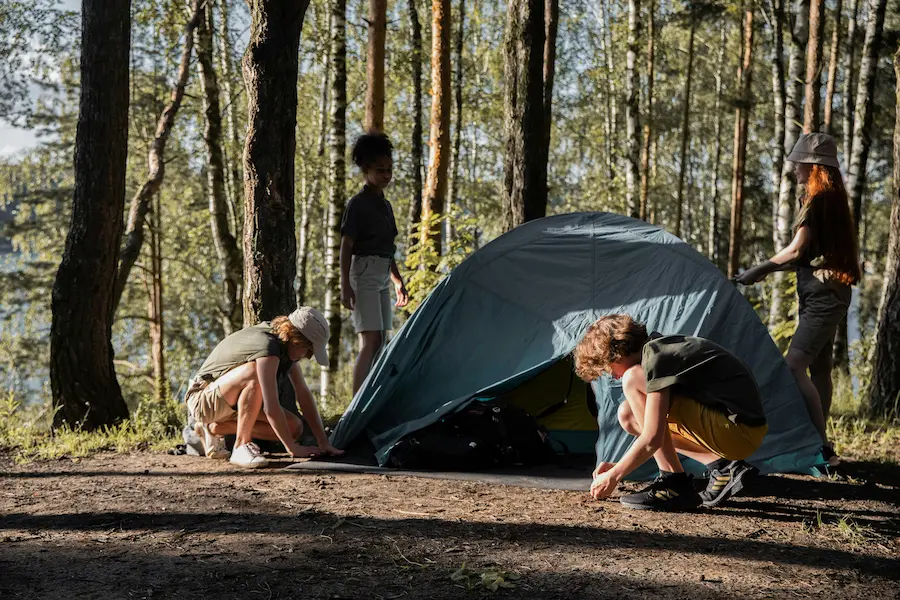
Real talk from someone who’s slept on the wrong side of a root, forgotten a can opener twice, and still comes back every single season.
Look, I’m not going to sugarcoat it — your first camping trip probably won’t be perfect. Mine wasn’t. I showed up with a brand-new tent I’d never practiced setting up, in the dark, in light rain. But here’s the thing: I was hooked anyway. That’s the honest-to-goodness truth about camping advice for beginners — the imperfection is part of the charm.
So let me save you from the mistakes I see first-time campers make over and over again.
1. Start with an easy campsite — seriously, don’t be a hero
I can’t stress this enough as first time camping advice: pick a managed campground for your first trip. We’re talking flush toilets, potable water, maybe a camp store nearby. Not the backcountry. Not 10 miles off-trail.
Think of it like this: you wouldn’t learn to drive on a mountain road. A developed campground lets you dial in your setup, your sleep system, your cooking routine — without stacking survival stress on top of learning stress. Remote spots will still be there after you’ve got two or three trips under your belt.
There’s zero shame in it. I still choose a well-maintained campground when I want a low-effort weekend. Reserve America and Recreation.gov are your best friends for finding spots.
Ready to pick your first spot? If you’re anywhere near the Pacific Northwest, we put together a beginner’s guide to the Oregon Coast campgrounds worth starting with: Oregon Coast Camping for Beginners
2. Your sleeping pad matters more than your sleeping bag
This is probably the most underrated piece of first time camper tips I give anyone: the ground will steal your warmth all night long if you don’t insulate yourself from it.
Your sleeping bag traps air around you — great. But compressed underneath your body? It’s basically useless. That’s where your sleeping pad earns its keep. Look for the R-value rating:
- R-2 or under — fine for warm summer nights above 50°F
- R-3 to R-4 — solid three-season choice
- R-5+ — cold weather and shoulder season
A $20 foam pad beats sleeping directly on the ground every single time. Learn this early, sleep well, and you’ll actually enjoy camping instead of dreading the nights.
🛏️ See tested picks: The Best Backpacking Sleeping Pads – Backpacker
3. Camp near water if you can swing it
Here’s a piece of camping tips for newbies that experienced campers already know by instinct: proximity to water makes everything easier.
Cooking, washing dishes, rinsing off before bed — it all becomes less of a chore when you’re not hauling heavy jugs from your car. Most developed campgrounds have water access, but even at primitive sites, choosing a spot near a creek or lake is a move you won’t regret.
Bonus? The ambient sound of running water absolutely knocks you out at night. It’s the best white noise machine you’ll ever find.
One caveat: always check if the water is safe to drink or needs filtering. Never drink directly from a stream without treating it first.
4. Keep your camp meals dead simple on the first trip
I’ve seen it happen too many times: a new camper shows up with a Dutch oven, a cast iron skillet, raw chicken, and big ambitions. By 8pm they’re eating granola bars because nothing went right.
My advice for first time campers on food: pretend you’re in college again. Instant oatmeal, ramen, pre-made sandwiches, trail mix. Meals that only need boiling water are genuinely your best friends at camp.
Here’s why: you’re going to be tired, probably a little disoriented, and your stove setup might take longer than expected. Simple food means you actually eat, stay fueled, and enjoy the experience instead of fighting your kitchen setup.
Gourmet campfire cooking is a whole skill worth developing — after trip one.
5. Make peace with the bugs before you go
Here’s some real camping tips for newbies that nobody puts on the pretty Pinterest boards: the mosquitoes will find you.
Bring a DEET-based repellent (30% concentration is the sweet spot for most situations). Wear long sleeves at dawn and dusk when bugs are most active. Pack a headnet if you’re headed somewhere notorious for biting insects.
And then mentally accept that you’ll probably still get a few bites. That’s not failure — that’s camping. It’s the same as getting sand in your shoes at the beach. Once you stop being surprised by it, it stops bothering you as much.
🦟 See tested picks: The 5 Best Stoves for Speedy Boil Times and Backcountry Feasts – Backpacker
6. You will forget something. Write it down after.
Every single camper I know — including people with 20+ years of experience — forgets something. A lighter. A towel. A spoon. The stakes to the tent.
The fix isn’t perfection. It’s iteration. After every trip, write down whatever you wished you’d brought. Add it to your packing list. Your kit gets smarter every single time.
Start with a basic checklist from a trusted source (I’ll link some below), then customize it to match how you actually camp. That personalized list is worth more than any “ultimate gear guide” you’ll find online.
7. What camping actually is
Here’s the real first time camping advice that no gear list will tell you:
Once you stop fussing over setup and food and bugs, something shifts. You sit outside. You listen to the wind move through the trees. You watch the fire or the stars, depending on the night.
The world slows down in a way it almost never does otherwise.
That moment — and I promise you’ll find it even on an imperfect trip — is why people keep going back. Every experienced camper started exactly where you are. And most of us were hooked somewhere between the first sunrise and the second cup of camp coffee.
One More Thing Before You Go
If there’s one piece of gear that earns its spot on every single trip — from your first campsite to your hundredth — it’s a good camp blanket. Something to wrap around yourself at the fire, throw over your legs on a cold morning, or spread out on a rock by the water.
The Wandering Warrior Blanket is built for exactly this kind of life. Packable enough to toss in your bag without thinking about it, tough enough to actually survive a camping season. It’s the kind of thing you stop noticing because it’s always just there — which is the highest compliment you can give a piece of camp gear.