

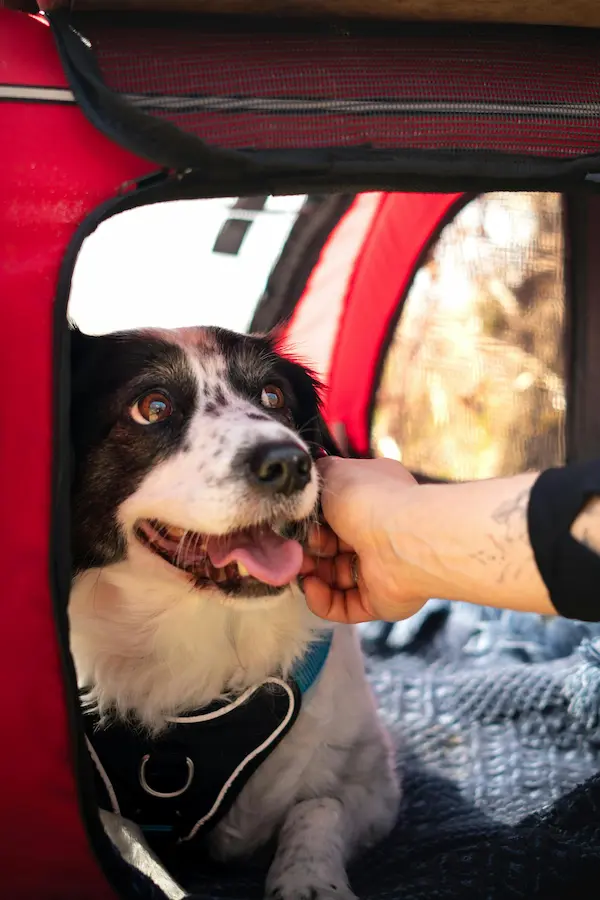
Every summer there’s a wave of posts going “I’m taking my dog camping for the first time, any tips?” So here’s everything I’d tell you in one place, whether you’re doing a simple tent weekend, truck camping with dogs, or dealing with a reactive dog who’s never slept outside a city.
“My dog loses his mind when he hears the word ‘camping’.”
Same. And honestly? That excitement is valid. Camping with dogs just makes sense — the smells, the space, the trails. But a campsite is a lot more stimulating than your local park, so a little prep goes a long way.
Check if the campsite actually allows dogs before you book anything
This sounds obvious but I’ve seen people show up to a no-pets campground with two labs. Don’t be that person.
Most dog friendly camping areas will have rules like: dogs on leash at all times, pets not allowed on certain trails, no leaving dogs unattended at the site. Read the fine print when you book. Some places are surprisingly strict; some are totally relaxed.
If you’re doing truck camping with dogs, also check whether your dog can sleep in the truck bed or cab — some campgrounds specifically flag noise rules overnight.
Leash on — even if your dog is “really good off-leash”
I cannot stress this enough. Outdoors is full of squirrels, deer, other dogs, unfamiliar campers — your well-trained dog can still bolt. A long tether line around the campsite is a game changer: they can move around, sniff everything, feel comfortable, without you having to watch them every second.
For anyone dealing with a camping with reactive dog situation — this is even more critical. Know where other dogs are camping nearby. Ask the campground hosts if possible. Buffer space = a much better trip for everyone.
Pack a proper dog kit (your checklist is not their checklist)
When people ask me about taking my dog camping for the first time, the packing question always comes up. Keep it simple but don’t skip the basics:
- Food + collapsible water bowl
- Leash, backup leash, and ID tag with your phone number
- Poop bags — more than you think you need
- Their blanket or a cheap dog bed from home
- A favourite toy or chew to keep them settled
Familiar smells help a lot, especially the first night. Don’t bring all-new stuff — bring what they already associate with comfort.
- A note on dogs in heat: If you’re thinking about camping with a dog in heat, you’ll want to be extra careful around other dogs at the site. Male dogs can get very persistent and stressed. It’s doable, but you’ll want a campsite with some buffer from neighbours, keep her leashed tighter than usual, and maybe avoid peak-traffic hours on shared trails.
Bring more water than feels necessary
Dogs run way more outdoors than they do at home — more running, more panting, more thirst. Even if your campsite is right next to a lake, drinking from natural water sources can cause stomach issues or worse (giardia is real, people).
Bring clean tap water from home. You’ll use more than expected. Dehydration in dogs happens fast during a hot active day, and a sick dog in the middle of nowhere is a rough experience.
Do a quick evening check — ticks, paws, burrs
Takes two minutes. Run your hands through their fur, check between toes, look around the ears and collar. You’re checking for:
- Ticks (remove immediately with a tick remover, not your fingers)
- Cuts or scrapes on paw pads from rough trails
- Burrs or plant material matted into fur
Small problems found early stay small. Ignored overnight they turn into a vet visit. Make it part of your evening routine right before you settle in by the fire.
Don’t leave them alone at the site
Most campgrounds explicitly ban unattended pets, and honestly it makes sense — a bored dog will bark for an hour straight, your neighbours will hate you, and wildlife can wander in. More importantly, your dog came for the trip too. Bring them along for the hike, the swim, the afternoon walk. That’s literally why you brought them.
Tire them out — a tired dog is a great camping companion
One of the best things about camping with dogs is that a full day outdoors absolutely flattens them in the best way. Long trail, a swim, exploring the woods — by evening they’re genuinely spent. Most dogs will just curl up next to the fire or in the tent and sleep hard. Compare that to a bored under-stimulated dog who whines all night.
Let them sniff everything. Don’t rush the walks. That’s literally what dogs live for.
The first night in a tent might be weird — that’s normal
Owls, wind through trees, animals rustling in the dark — it’s a lot of new sounds for a dog on their first camping trip. Some dogs are totally fine. Some are restless and confused. Give it a night or two before you write off the experience.
Bring their bed or blanket inside the tent with you. Keep your usual calm bedtime tone. Once they understand “this is just where we sleep now,” most dogs adapt quickly — and many end up being the most enthusiastic campers in the family.
- here’s a reason dogs and camping just go together. They sit by the fire. They watch the trees. They nap in patches of sun. In a lot of ways, dogs already know what camping is for. You just have to not forget the water bowls.
Further reading: For real talk from fellow campers — trip reports, gear questions, reactive dog advice — r/camping on Reddit is worth a browse.
Gear note: A lot of what makes camping comfortable comes down to the basics — and a good blanket is one of them. Something durable enough for the ground, warm enough for the fire, and hardy enough to double as your dog’s sleeping spot. We’ve been using the Overland Roamer Blanket and it holds up well on both counts.