

There’s a specific kind of fear that shows up the first time something you assumed was fiction turns out to be real. For most of us, quicksand belongs in the same mental drawer as pirates and dinosaurs. It feels like something from an old cartoon.
So when a backpacker on the Hayduke Trail in Arches National Park posted about getting trapped in quicksand, it struck a nerve. A search-and-rescue team had to pull him out. Comment after comment said some version of the same thing: “I thought this was folklore.”
If you’re new to hiking, especially in the canyon country of the American Southwest, this story is worth sitting with. It’s not here to scare you off the trail. It’s here to help you walk it a little smarter.
It Looked Like Every Other Wash He’d Crossed
Here’s what made this story unsettling to so many readers: there was no warning sign. The hiker had already crossed dozens of similar wet washes and slot canyons without any trouble. The ground looked completely solid, right up until it wasn’t.
One step in, and his leg sank in. It set almost like concrete. About an inch of flowing water was moving over the sand on the surface. Nothing about it looked different from a normal creek crossing.
How Quicksand Actually Forms
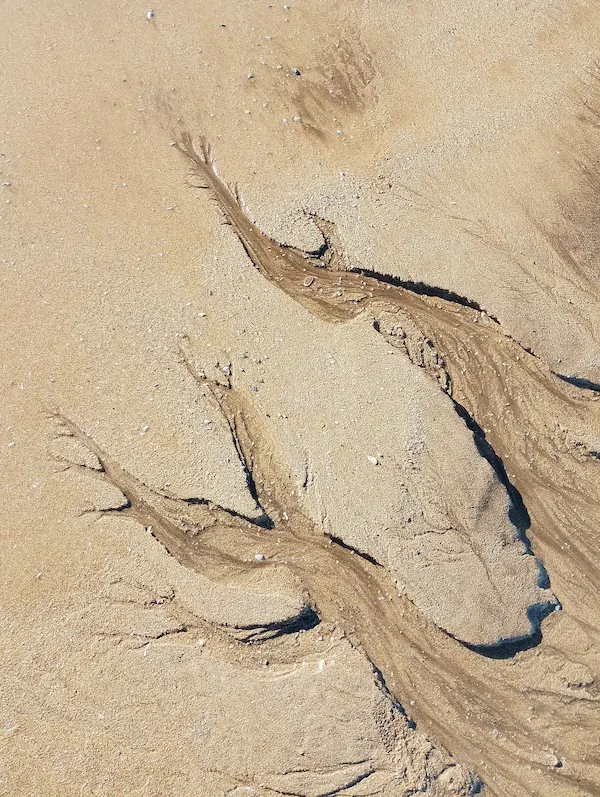
That unpredictability is the real lesson here. Quicksand isn’t a swamp full of bubbling mud with a sign posted next to it. It usually forms where a spring or seep pushes water up through sand from underneath. That flow keeps the sand grains loosely suspended.
Step on it, and your weight forces the water out from under your foot. The sand then compacts hard around your leg, almost instantly. From the surface, that patch of ground can look identical to solid, dry sand nearby. Sometimes the only tell is a slightly smoother or shinier texture where water sits closer to the surface.
For anyone gearing up for their first time outdoor adventure in desert canyon terrain, here’s the takeaway: in wash bottoms, slot canyons, and anywhere you see recent water flow over sand, treat smooth or damp-looking patches with extra caution. Do this even when the ground around them looks totally normal.
What To Do If It Happens To You
The good news is that real quicksand is rarely as dramatic as the movies make it look. It’s also very survivable if you know a few basics.
- Don’t panic and don’t thrash. Fighting hard against compacted sand usually just tires you out. It can also make you sink further.
- Shift your weight backward. Lean back and spread your weight over a larger area. Lying back onto the surface, if you can, takes pressure off the trapped leg. As water slowly re-suspends the sand around your foot, movement becomes possible again.
- Move slowly once resistance eases. Don’t yank your leg free all at once.
- Call for help if you’re stuck for more than a few minutes. This matters most if you’re hiking alone.
The One Piece of Gear Everyone Recommended
If there was a single takeaway from readers reacting to this story, it was this: carry a satellite communicator or personal locator beacon in terrain without cell service. It won’t stop quicksand from forming. But it turns a life-threatening situation into a recoverable one.
The hiker in this story was found and rescued because he could call for help. By his own account, he wasn’t confident he could have dug himself out alone. For beginners planning trips into places like Arches or Canyonlands, a beacon is worth the investment. Pack it right alongside your water filter and first-aid kit.
Quicksand Is Rare — But Worth Respecting
It’s worth putting this in perspective. Genuine quicksand entrapments serious enough to require rescue appear to be quite rare. Searches for similar incidents in this same general area turn up only a small handful of documented cases over the past decade or so.
This isn’t a hazard that should keep you off the trail. It’s a hazard that should keep you paying attention.
That’s really what a first time outdoor experience is about. You learn to read terrain. You learn to respect water and sand together. You pack the right safety gear, and you accept that even familiar-looking landscapes can hold a surprise. A little preparation goes a long way toward making sure a scary story stays just that: a story, not an emergency.
Heading into canyon country soon? Pack a satellite beacon. Tell someone your route and return time. Give any smooth, damp-looking sand in a wash bottom a wide berth. The trail will still be beautiful — just walk it with your eyes open.
Further Reading
Curious to see the full story in the hiker’s own words, or how outdoor and news outlets covered it? Start with the original Reddit thread. Then check out a few of the reports below for more detail on the rescue itself and the broader context of quicksand hazards in the desert Southwest.
AccuWeather: “‘Quicksand is real’: Hiker rescued after getting trapped in Arches National Park” — A weather-and-conditions angle, useful if you’re curious how cold temperatures raised the stakes.
Original Reddit thread: “Quicksand Trapped Me on the Hayduke in Arches NP Today” — The hiker’s own account, plus the extensive Q&A that followed in the comments.
Backpacker Magazine: “A Seasoned Thru-Hiker Got Trapped in Quicksand in Arches National Park” — A detailed breakdown of the rescue timeline near Courthouse Wash.
The Cool Down: “Hiker painfully recalls moment they got caught in quicksand on trail” — A reader-friendly recap focused on the “no warning” nature of the hazard.