

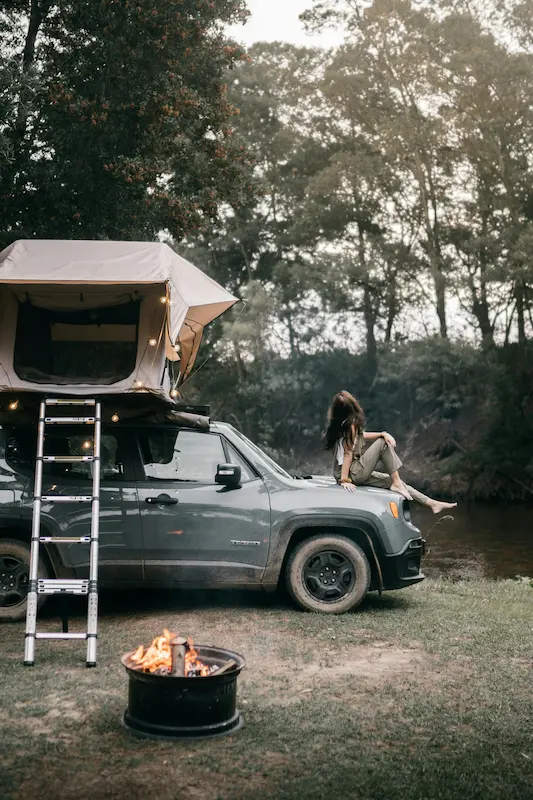
Ask any woman who’s been camping solo for a few years and she’ll tell you: the fear you’re feeling right now doesn’t fully go away on trip fifteen. What changes is that by then, you know exactly what to do with it.
Experienced women campers keep landing on the same truth: the hardest part of woman camping alone happens in your living room, not in the woods.
The overthinking. The “what-ifs.” The well-meaning friends who ask if you’re sure that’s a good idea. By the time you’re actually sitting next to a fire with tea going, most of that noise has evaporated. What replaces it is something quieter and more useful: the steady realization that you’re handling it.
Your First Night Camping Alone Lives Large in Your Head
Every experienced solo woman camper remembers her first night. A raccoon in the brush sounds exactly like a bear. Wind across nylon sounds like footsteps. The brain, bless it, runs worst-case scenarios at full volume.
This is normal. It’s also temporary. Here’s what actually matters for your first time camping alone — not rules, just what the veterans say works:
- Arrive before dark. Setting up in daylight is a different experience. You learn the site, you orient yourself, you’re not fumbling.
- Start with a populated campground. Car camping with neighbors nearby isn’t a compromise — it’s a smart first rung on the ladder.
- Phone charged, someone knows your location. Not because disaster is likely. Because it removes a layer of mental load.
- If something feels off, leave. Not every site, not every situation, deserves your commitment to toughing it out. Trust that instinct. It’s data.
- Don’t perform bravery. You don’t need to push to the most remote spot on your first solo trip to prove something. Build the skill, not the image.
Confidence in camping solo doesn’t arrive fully formed. It compounds. Each trip hands you a little more of it.
Woman Camping Alone Isn’t a Survival Challenge — It’s Logistics
A lot of first-timers imagine camping alone as some gritty wilderness ordeal. Experienced solo campers look nothing like that. They pick comfortable sites, eat real food and have backup plans that don’t require drama.
What experienced women solo campers actually deal with — especially on longer trips — isn’t danger. It’s decision fatigue. When you’re fully responsible for every variable, your brain gets tired:
- Water source and treatment
- Weather shifts and what they mean for your next move
- Food planning and fuel levels
- Where you’re sleeping tomorrow night
- Device charging, bear canisters, bathroom logistics
This is why veteran solo campers develop rituals. Morning coffee before anything else. Journaling at dusk. Cooking the same simple rotation of meals. Staying put for a few days when you find a good site rather than constantly relocating.
“After enough solo trips, camping alone stops feeling like an adventure. It starts feeling like the most efficient version of being home.”
The mission is a functioning temporary home, not an expedition film. Once you orient around that, the logistics become almost meditative.
Why Camping Alone Becomes Something Woman Keep Doing
Here’s what no one fully explains until you’ve experienced it: camping solo offers a specific kind of quiet that’s genuinely hard to find anywhere else in modern life.
You wake when you want. You move at your own pace. No one pulls your attention sideways. You make every small decision — when to eat, where to walk, how long to sit — and those decisions belong entirely to you.
Women who camp alone regularly describe it as the first time in years they felt fully present. Not performing presence. Actually there.
But seasoned campers also admit something people sometimes leave out: freedom and loneliness can arrive on the same afternoon. There’s a gorgeous sunset, and then a wish to share it with someone. That mix is part of the experience, not a sign that something’s wrong. The point isn’t to become someone who doesn’t feel things alone. It’s to discover that you can feel things fully alone, and still be steady.
The “Alone Together” Model: A Smarter First Step
From the Community
One of the most-recommended approaches for first time camping alone is what some women call “alone together” — a group books neighboring campsites, everyone has their own tent and their own space, but they’re close enough to check in, share a meal, or just know someone’s there.
The vibe isn’t a group trip. It’s hammocks, breakfast burritos, a communal fire some nights, solo walks whenever you want. Everyone practices the actual experience of camping solo — making their own decisions, managing their own setup, sleeping in their own space — but with a soft landing built in.
For many women, this is the right first step. Not because they can’t handle solo camping, but because familiarity builds confidence faster than forced bravery. Once the rhythms feel familiar, going fully solo feels like the obvious next thing rather than a leap.
The Real Point of Camping Solo
Ask any veteran solo camper what she’d tell someone starting out, and the answer is consistent:
Camping alone doesn’t make the fear disappear. It makes you realize the fear was never the most accurate read on your capabilities. Sit with the discomfort long enough, and what’s on the other side is usually competence — and then, eventually, ease.
The women who keep coming back to camping solo aren’t the fearless ones. They’re the ones who learned to move through the fear and discovered that their own company, a good site, and a fire going is genuinely enough.
Start small. Pick a campground with neighbors. Tell someone where you are. Build from there. The wilderness isn’t waiting to test you — it’s mostly just waiting to be quiet with you.
The Blanket That Goes Everywhere You Do
Solo camping means carrying your own comfort — and this one earns its weight. The Overland Roamer Blanket by Tropical Adeile is the piece of kit seasoned solo campers reach for at the end of every cold night. From the back of the car to a hammock spot to a stargazing field, it goes. Durable, packable, and warm enough to make you stay outside longer than you planned.
Further Reading
- Camping for Beginners: Simple Advice for Your First Camping Trip — Nobody’s first camping trip is perfect. Here’s the first time camping advice that actually helps — sleep warm, eat simple, survive the bugs, and enjoy every minute of it.
- r/camping — Tips on camping longer-term alone as a woman — A thread covering mindset, safety habits, and practical tips from women who camp solo regularly. Key themes: decision fatigue on longer trips, building daily routines, trusting instincts over fear.
- r/camping — Solo camping as a woman — Women sharing their first-time experiences and ongoing practice. Key themes: arriving before dark, choosing populated campgrounds first, the shift from “I’m alone” to “I can take care of myself.”
- r/camping — An “alone together” solo girls camping trip report — A trip report on the “alone together” format: neighboring campsites, separate spaces, shared campfire. A recommended first step if fully solo camping feels like too big a leap.